

Manufacturers don’t struggle with documents because there are too many. They struggle because the data inside them never lands where it should. Orders, invoices, and compliance records come in as PDFs, scans, or emails, so teams end up retyping everything into ERP systems just to keep operations moving.
That’s where things break. Every supplier uses a different format, every document looks slightly different, and basic OCR can’t keep up. It extracts text, but not meaning, so errors slip through and workflows slow down.
Even with 78% of companies using AI for document processing, many still deal with unreliable outputs because the system can’t handle real-world variation.
The shift now is simple: stop reading documents like text and start processing them like data. Systems that understand structure, context, and validation rules can move information straight into workflows without manual input.
Key Takeaways
- Manufacturing struggles with document variability, not volume. Changing formats makes template-based OCR unreliable.
- Traditional OCR extracts text but misses structure, which creates manual correction work.
- Modern IDP adds understanding and validation, pushing clean data directly into ERP systems.
- Leading platforms handle format changes, validate data, and integrate with systems like SAP and Oracle.
- Automation can reduce manual document handling by up to 70% and improve processing speed and accuracy.
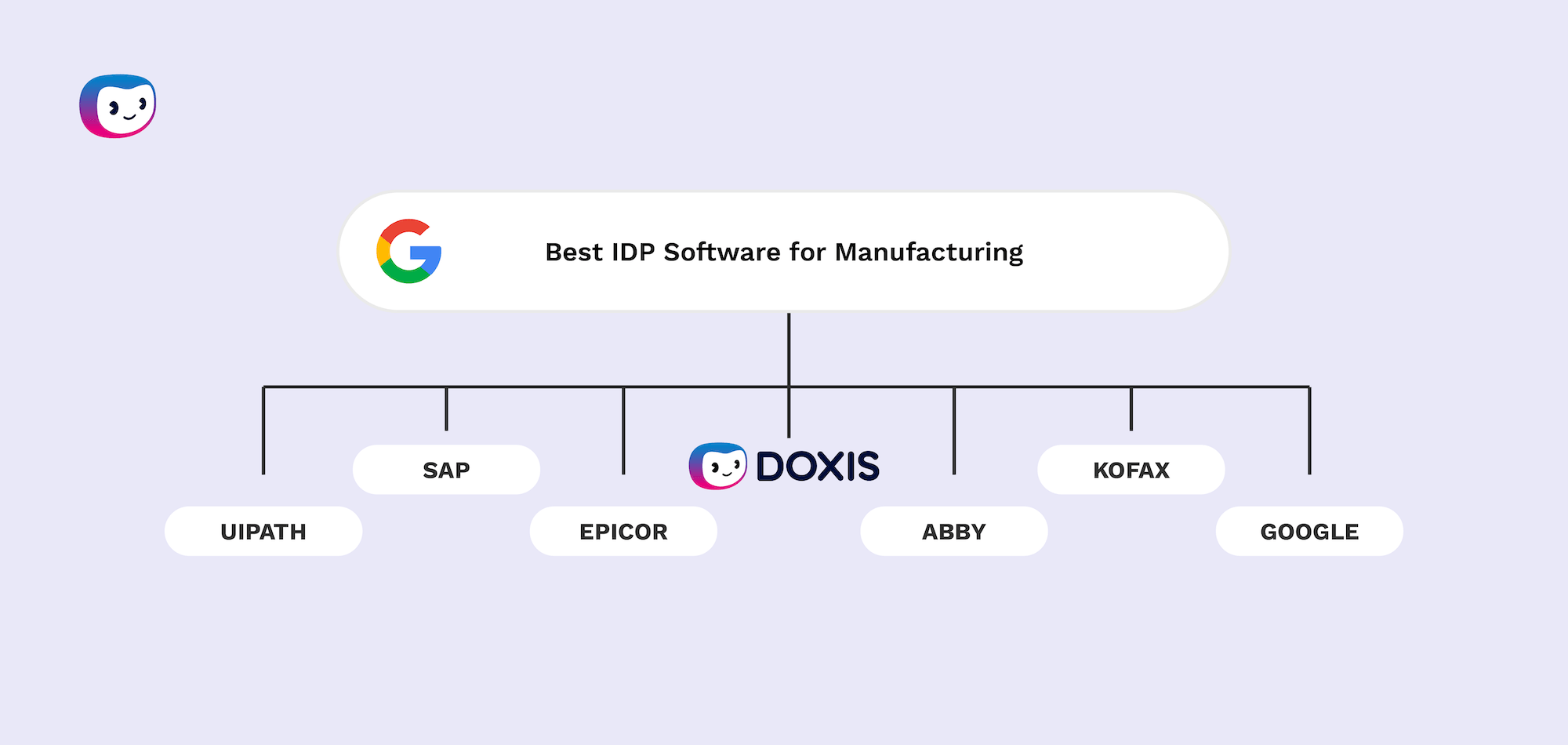
- Tools like Doxis AI.dp, ABBYY, SAP DIE, UiPath, Google Document AI, Epicor, and Tungsten Automation each fit different environments and needs.
What Is OCR in Manufacturing?
OCR, or Optical Character Recognition, converts text from manufacturing documents into machine-readable data. It takes inputs like purchase orders, invoices, and quality reports and turns them into text that can be stored or pushed into ERP systems.
The key detail is how it works. OCR reads characters, not meaning. It scans a document and outputs raw text, which makes content searchable but not reliably structured.
That limitation becomes visible once documents need to be processed, not just stored.
How OCR Works in Manufacturing
Manufacturing documents are highly variable. Supplier invoices, customer orders, and compliance reports all follow different formats, often with tables, multiple languages, and changing layouts.
Traditional OCR processes them the same way: capture → recognize → output text. Structure is lost in that step. Tables become flat text, relationships disappear, and fields are no longer clearly defined.
To make this usable, companies rely on templates. These define where data should appear, but they break as soon as layouts change. Each new format adds configuration work, which slows processing and introduces errors.
This is where OCR starts to hit its limits in manufacturing environments.
The Shift to AI-Powered and Agentic OCR
Modern OCR solves this by adding understanding to extraction. Instead of just reading text, it interprets document structure and context.
Template-free extraction allows the system to handle new layouts without reconfiguration. Contextual processing links related data, such as matching part numbers to quantities or delivery dates.
Validation adds a control layer. Extracted data is checked against ERP records before it enters workflows, which prevents errors from moving downstream.
This changes the role of OCR. It moves from digitizing text to delivering structured, validated data that can be used directly in manufacturing processes.
OCR vs Traditional Document Processing in Manufacturing
| Feature | Traditional OCR | AI or Agentic OCR |
| Recognition | Characters only | Characters, context and structure |
| Layout handling | Template based | Template free |
| Handwriting | Limited accuracy | Advanced model recognition |
| Technical diagrams | Not supported | Visual and text integration |
| ERP integration | Manual mapping | Direct API or connector mapping |
| Format variability | Breaks easily | Adapts dynamically |
In practice, this difference determines whether documents flow through operations or get stuck in manual review. Traditional OCR depends on stable formats, so every variation creates exceptions. AI-powered OCR adapts to layout changes and validates data before it enters systems, which reduces rework.
This has a measurable impact. Manufacturing organizations adopting AI-driven automation report 7% to 20% productivity gains and up to 20% improvement in output. These improvements come from removing manual steps and stabilizing data flows across processes.
The shift is not about faster reading. It is about turning documents into reliable inputs for production, procurement, and compliance workflows.
The 7 Best OCR Software Solutions for Manufacturing
1. Doxis AI.dp
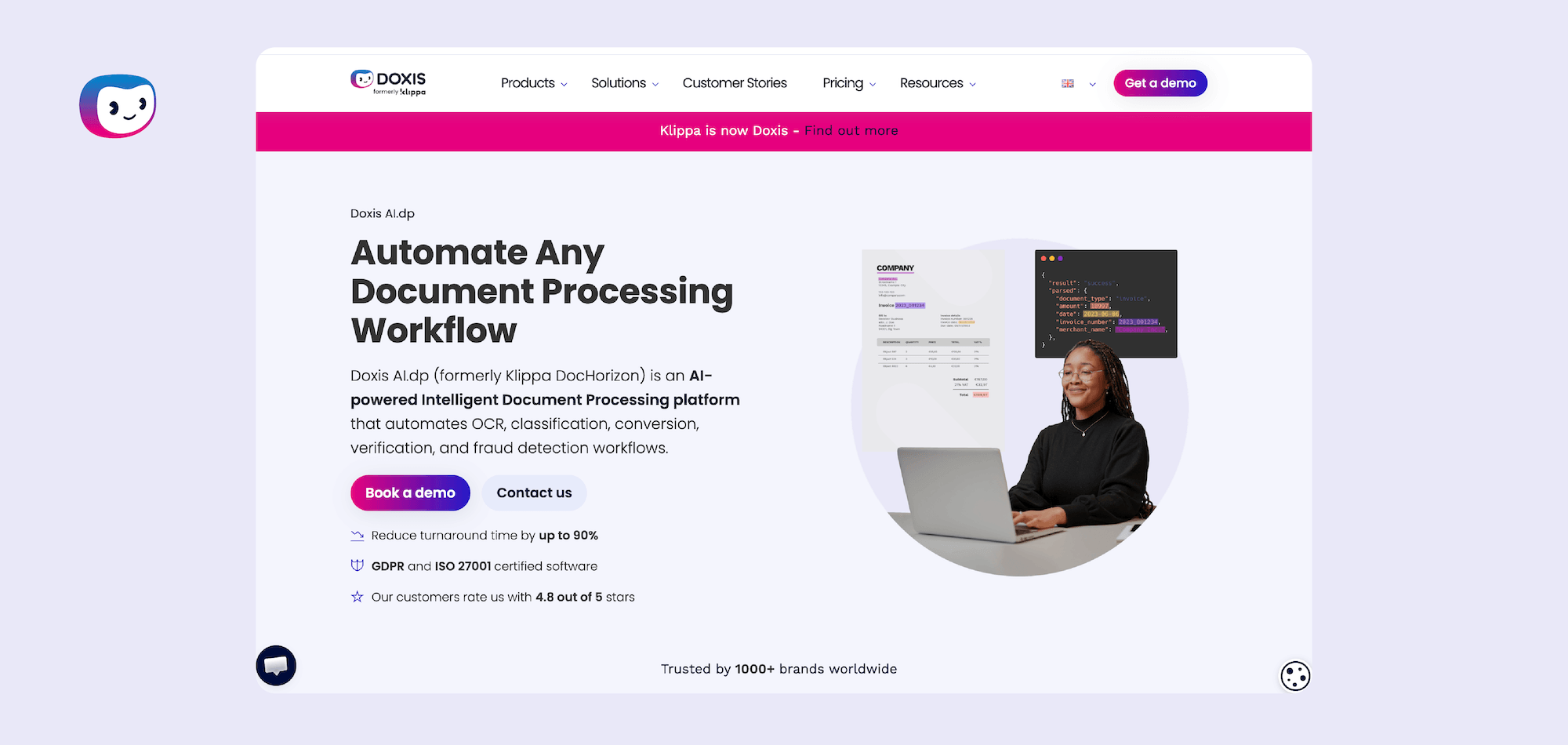
Best for: Enterprise and mid-market manufacturers needing end-to-end OCR-powered automation for high-variety documents
Doxis AI.dp is an AI-powered intelligent document processing platform designed to handle the document complexity of modern manufacturing. It uses template-free OCR extraction and contextual understanding to process over 100 document types, including purchase orders, vendor invoices, bills of materials, ISO compliance certificates, quality inspection reports, and shipping manifests.
Built for operational scale, Doxis AI.dp offers GDPR-compliant EU data processing, built-in fraud detection via pixel-level and metadata analysis, and deep ERP integration for SAP, Oracle, Epicor, and Microsoft Dynamics. This means extracted data flows directly into manufacturing workflows without manual re-entry.
Key strengths:
- Template-free OCR and AI extraction across multiple manufacturing document types
- Multi-language Latin-script recognition for global supply chains
- Metadata and pixel-level fraud detection
- Direct ERP connectors with validation against master data
- ISO 27001 certified with EU-based infrastructure
Primary Manufacturing Use Cases
- Automated purchase order processing with line-item accuracy
- Vendor invoice capture and validation against ERP pricing data
- Compliance reporting automation for ISO and safety documents
- Shipping and customs document digitisation
- Bill of Materials extraction and alignment with inventory records
Limitations:
- Advanced API integration requires some development expertise
- Currently no support for non-Latin alphabets
Pricing: EUR 25 free credit. License or usage-based pricing model. Contact Doxis for pricing details.
2. ABBYY Vantage
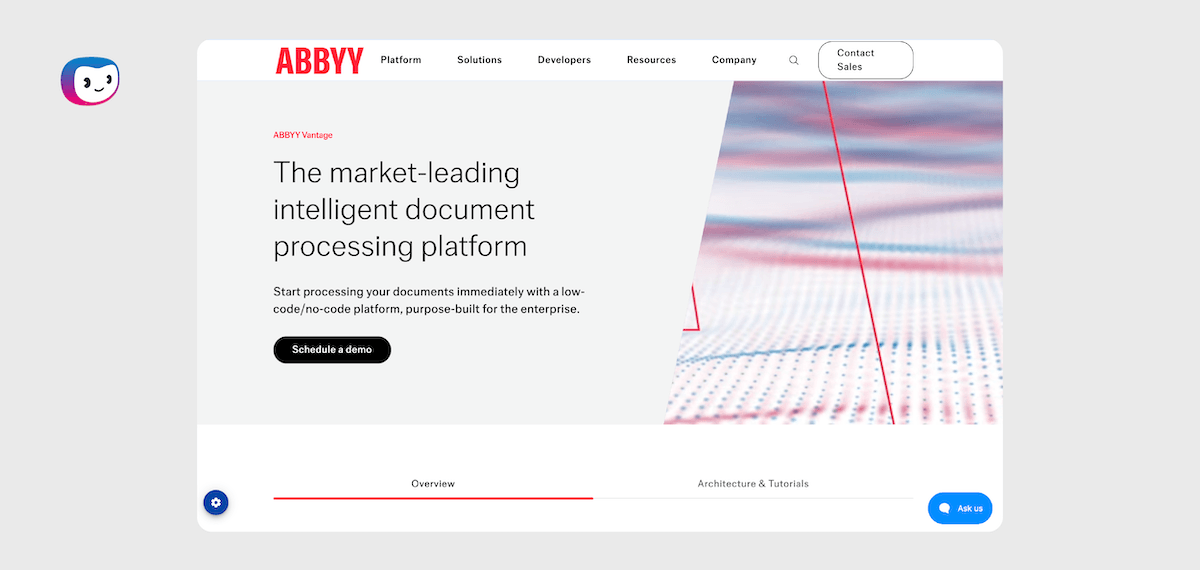
Best for: Large manufacturing enterprises with global suppliers
ABBYY Vantage combines OCR, natural language processing, and machine learning for structured, semi-structured, and unstructured document types. It provides pre-built “skills” for manufacturing-relevant documents such as purchase orders, invoices, and bills of materials, which can be customised.
Key strengths:
- Supports 200+ languages, ideal for multinational supply chains
- Prebuilt extraction models for procurement and compliance forms
- Proven accuracy improvements on low-quality scans
Limitations:
- Requires IT or systems integrators for setup
- Licensing costs may be high for mid-market manufacturers
Pricing: Enterprise subscription model, custom quotes.
3. SAP Document Information Extraction
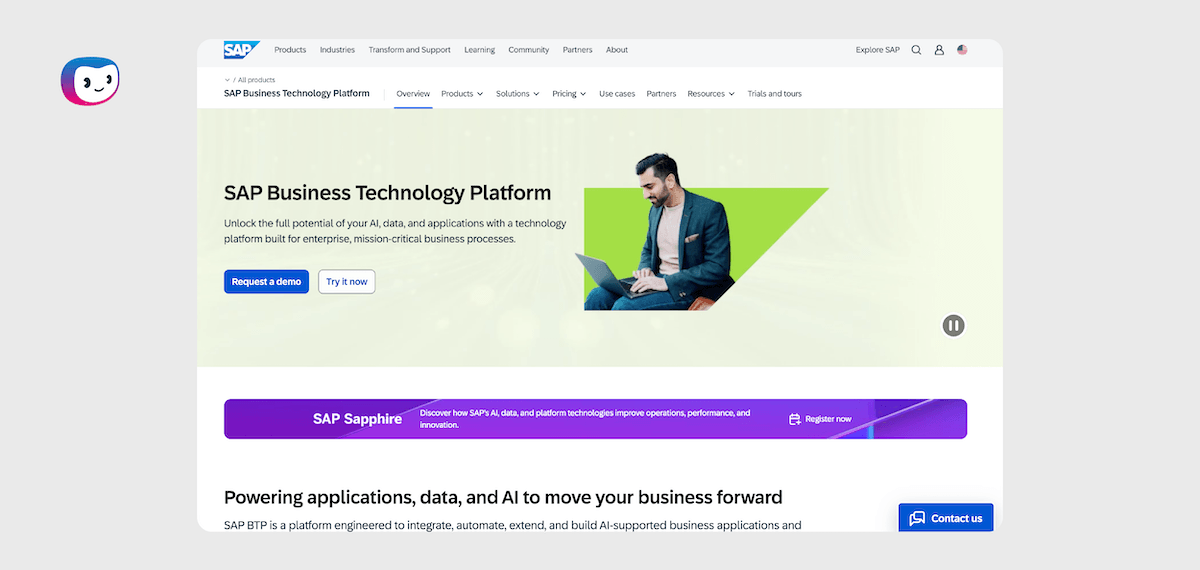
Best for: SAP S/4HANA and SAP ECC-based manufacturing operations
A cloud-based OCR service within the SAP Business Technology Platform, purpose-built for SAP ERP integration. It handles standard business documents, including invoices and purchase orders, with strong native validation.
Key strengths:
- Native SAP integration and master data checks
- Pre-trained on large volumes of business documents
- Cloud scalability
Limitations:
- Narrow document type coverage (BOMs, QC reports may require custom models)
- Limited value outside the SAP ecosystem
Pricing: Subscription-based, metered per document page.
4. UiPath Document Understanding

Best for: RPA-based document processing within existing UiPath workflows
UiPath’s Document Understanding module integrates AI OCR directly into RPA workflows, making it a suitable choice for manufacturers who already use UiPath for automation. The platform supports hybrid extraction, combining template-based OCR with machine learning models to handle variable document structures. A human-in-the-loop validation process allows teams to review and correct low-confidence results before they are posted to ERP systems, ensuring that quality requirements in manufacturing are met.
Key strengths:
- Combines AI OCR extraction with end-to-end workflow automation
- Strong ERP connectors for SAP, Oracle, and Microsoft Dynamics
- Supports manual validation for high-accuracy processes
- Scalable for large volumes of manufacturing documents
Limitations:
- Requires RPA developer expertise to implement and maintain workflows
- Format variability can cause automation breakdowns that require reconfiguration
- Licensing and infrastructure costs may be high for OCR-only projects
Pricing: Enterprise licensing available with both on-premise and cloud deployment options.
5. Google Document AI
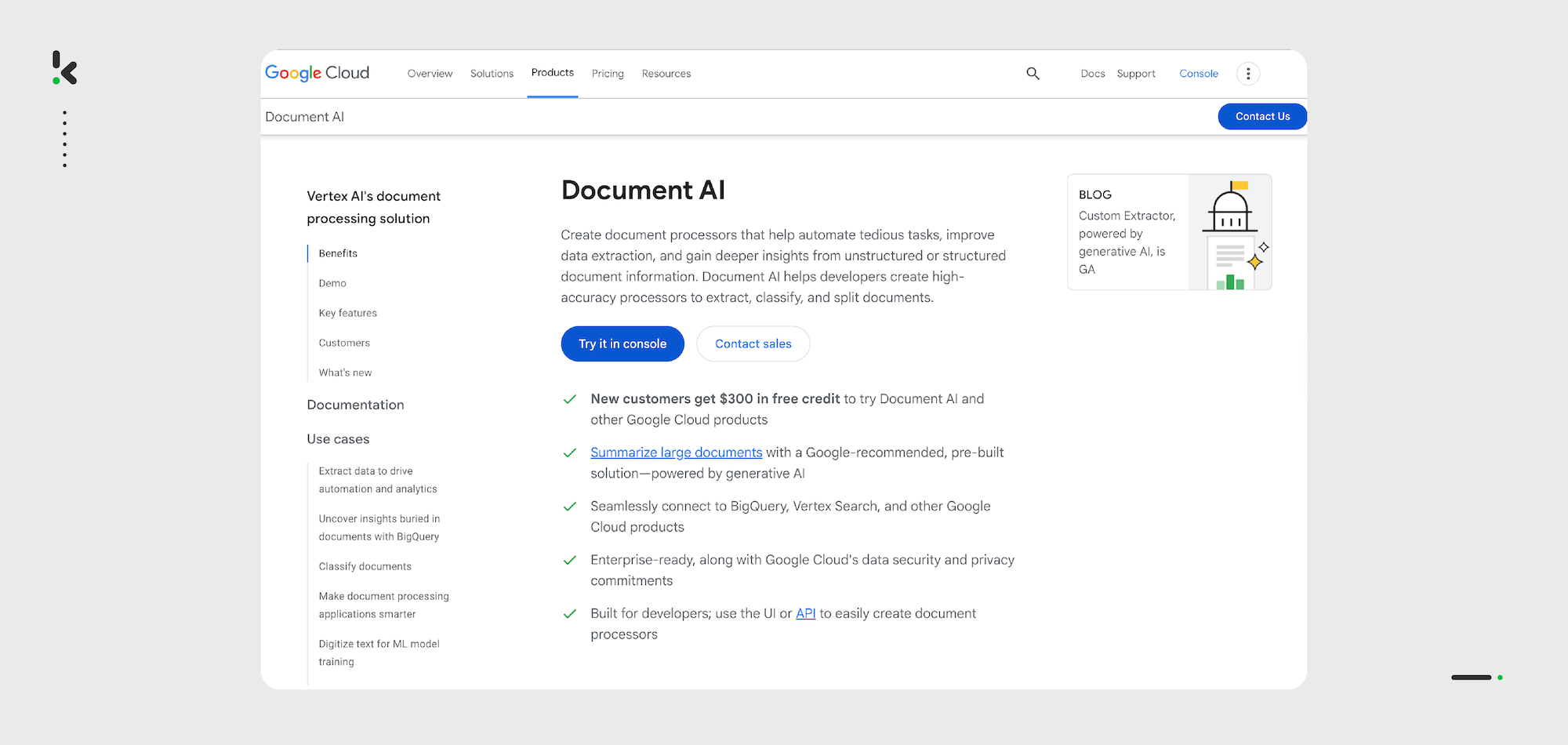
Best for: Cloud-native manufacturing automation with custom model training
Google Document AI is a flexible, API-first OCR platform that processes common business documents through pre-trained models and allows custom model creation for proprietary formats. It offers high OCR accuracy, even on low-quality scans common in manufacturing supply chains. Developers can train custom extractors for documents like bills of materials, complex inspection reports, or technical manuals with relatively small labeled datasets. Its integration with Google Cloud services like BigQuery and Cloud Storage makes it ideal for manufacturers already invested in GCP.
Key strengths:
- High OCR accuracy on poor-quality scans and faxes
- Custom model training for manufacturing-specific formats and layouts
- Works seamlessly with Google Cloud data tools for downstream processing
- Supports multi-language extraction for global suppliers
Limitations:
- API-first design requires software development skills
- No out-of-the-box, no-code interface for business staff
- May require additional tools for compliance document automation
Pricing: Pay-per-page pricing model with volume discounts; operates entirely in the Google Cloud environment.
6. Epicor Document Management
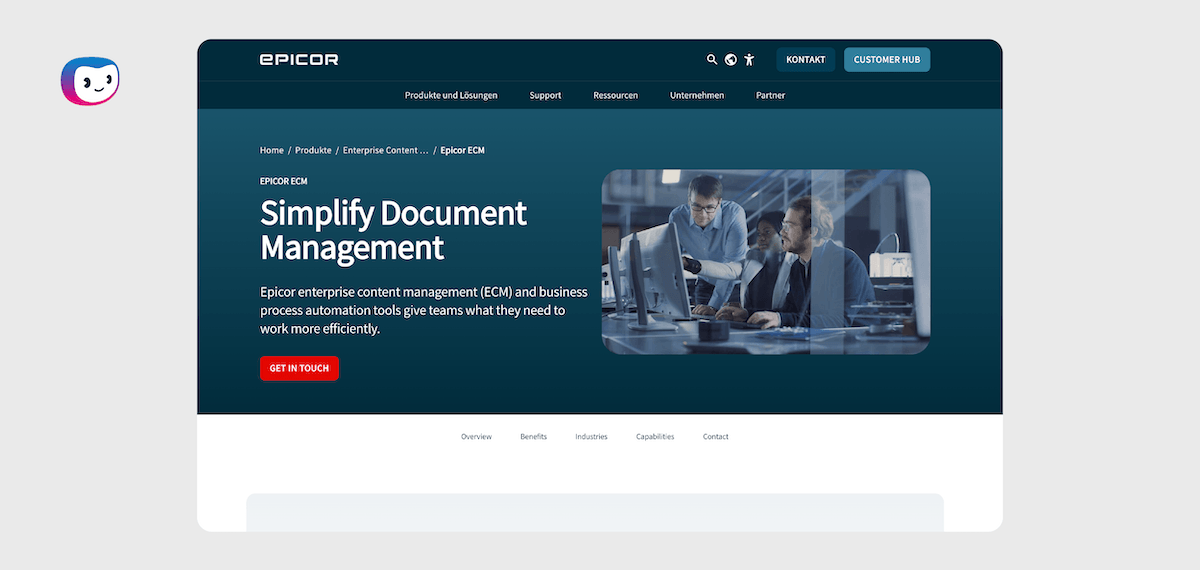
Best for: Manufacturers working entirely within Epicor ERP
Epicor’s Document Management module offers built-in scanning and OCR capture that routes documents straight into ERP workflows. For manufacturers with predictable and standardised document formats, this provides an efficient way to link documents with transactions such as purchase order creation, invoice matching, and quality report filing. The system’s close integration eliminates complex middleware or mapping, allowing immediate use for straightforward capture tasks.
Key strengths:
- Native integration with Epicor ERP modules
- Direct scanning and indexing for internal workflows
- Minimal setup for standardised manufacturing documents
- Available as part of Epicor’s core feature set
Limitations:
- Template-heavy; struggles with varied customer or supplier formats
- OCR accuracy is lower than that of modern AI OCR platforms
- Lacks advanced validation or fraud detection features
Pricing: Included within Epicor licensing; no additional per-document fees for internal capture.
7. Tungesten TotalAgility
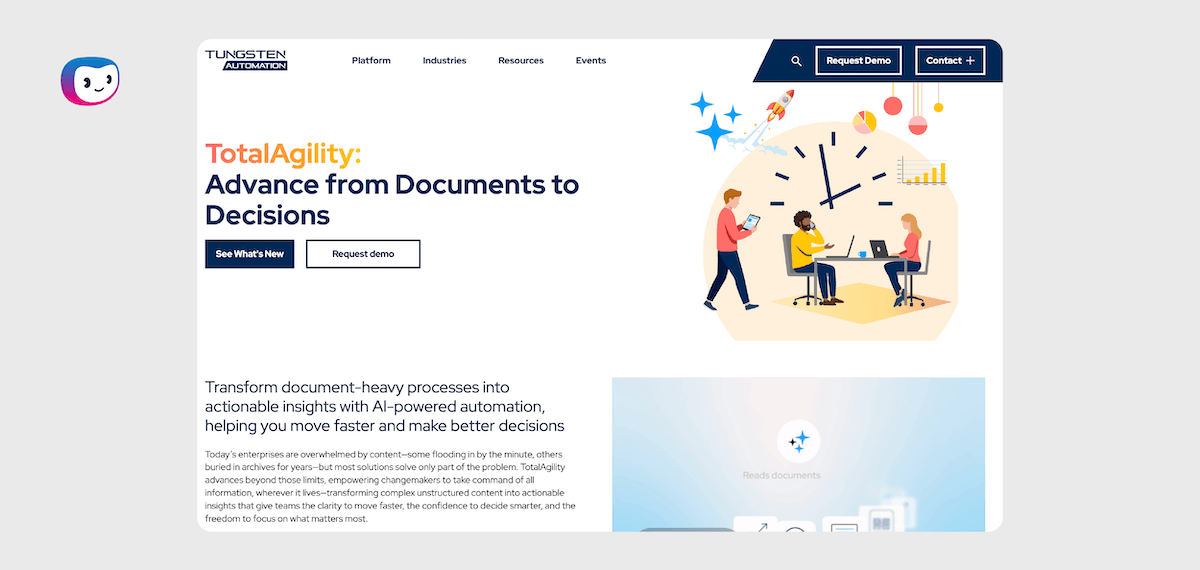
Best for: Enterprises requiring workflow plus document capture at scale
Tungsten Automation TotalAgility is an enterprise-grade document automation suite that incorporates OCR, machine learning extraction, and workflow orchestration. It supports multi-channel capture from scanners, email, fax, and mobile devices, making it well-suited for large manufacturing organisations with varied input sources. Mature ERP connectors allow integration with SAP, Oracle, and other manufacturing platforms, and configurable validation rules ensure extracted data matches operational requirements.
Key Strengths
- Handles high-volume manufacturing document capture and processing
- Mature ecosystem with long-standing ERP and MES integration options
- Flexible channel inputs, including fax, email, and mobile scanning
- Configurable validation steps tied to manufacturing production workflows
Limitations
- Implementation timelines can be lengthy, often months
- Higher total cost of ownership compared to cloud-native OCR solutions
- Requires skilled administrators for ongoing maintenance
Pricing: Enterprise licensing with optional cloud services; custom quotes for deployment scale and features.
Where Doxis AI.dp Fits in Manufacturing OCR
Doxis AI.dp is designed for manufacturing environments where document variety and process integration are both high. It supports a wide range of document types without relying on templates and combines extraction with validation and workflow integration, which makes it suitable for end-to-end document processing rather than isolated OCR tasks.
Its main strength is flexibility across mixed document scenarios. Instead of optimizing for a single use case, it processes invoices, orders, compliance records, and technical documents within the same system, while validating extracted data against ERP or business rules before it enters workflows.
Other platforms remain strong in specific areas. ABBYY Vantage performs well in multilingual environments and standardized document sets. SAP Document Information Extraction is tightly aligned with SAP-centric processes. UiPath Document Understanding fits organizations already built around RPA automation, while Google Document AI offers customization for developer-driven implementations. Epicor and Tungsten Automation continue to serve ERP-specific and legacy capture use cases.
The difference is not a single feature advantage, but scope. Doxis AI.dp focuses on combining document understanding, validation, and workflow execution in one system, which is relevant for manufacturers dealing with diverse document inputs across multiple processes.
Automate Manufacturing Document Processing with Doxis AI.dp
Processing manufacturing documents manually is slow, error-prone, and unscalable. Whether it is a purchase order with dozens of line items, a multi-page ISO compliance certificate, a complex bill of materials, or a handwritten quality inspection report, manual re-entry delays production and increases the risk of costly ERP posting errors.
Doxis AI.dp removes that bottleneck by combining AI-powered, template-free OCR with contextual data understanding. It processes over 100 manufacturing document types without layout-specific configuration, detects fraud through metadata and pixel-level analysis, and validates extracted values against ERP master data and trusted compliance registries.
With native connectors for SAP, Oracle, Epicor, and Microsoft Dynamics, Doxis AI.dp ensures extracted data flows seamlessly into your operational workflows. It is fully GDPR compliant with EU-based infrastructure and ISO 27001 certified, making it an ideal choice for manufacturers who must balance efficiency with regulatory requirements.
Key Benefits for Manufacturing Teams
- Reduce manual document entry by up to 70 percent
- Achieve line-item extraction accuracy above 99 percent
- Eliminate template maintenance for variable supplier and customer formats
- Speed up ERP posting cycles for procurement, production, and compliance
- Maintain audit readiness with automatically indexed and validated records
Bottom line: Doxis AI.dp is the manufacturing OCR solution that delivers both speed and certainty across any document type, enabling your team to focus on production, quality, and growth rather than paperwork.
Ready to see how Doxis fits your workflow? Request a free demo below or get in touch with our team to discuss your specific requirements.
FAQ
OCR software for manufacturing reads and digitizes text from paper or scanned documents to automate workflows. Doxis AI.dp uses AI and advanced OCR to capture and structure manufacturing data for faster processing.
2. Which manufacturing documents can be scanned with Doxis AI.dp?
Doxis AI.dp can scan invoices, packing slips, material certificates, quality control forms, and shipping documents. It supports multiple file formats including PDF, JPG, PNG, DOCX, and XLSX.
3. Does Doxis AI.dp support multiple languages and character sets?
Yes, Doxis AI.dp supports multilingual OCR, including Latin, Cyrillic, and Asian scripts. This enables manufacturing companies to process global supplier documents without manual translation.
4. Is OCR processing with Doxis AI.dp secure and compliant?
Yes, Doxis AI.dp is GDPR‑compliant and ISO‑certified. It offers encryption, access controls, and optional anonymization for sensitive manufacturing data.
5. Can Doxis AI.dp process thousands of manufacturing documents in one batch?
Yes, Doxis AI.dp offers batch processing and API workflows to handle thousands of documents in parallel. This ensures high throughput in production and supply chain processes.
6. How can OCR improve manufacturing supply chain efficiency?
OCR reduces manual data entry and speeds up order and delivery processing. Doxis AI.dp connects captured data directly to ERP or MES systems for real‑time supply chain updates.
7. Does Doxis AI.dp integrate with manufacturing ERP or MES platforms?
Yes, Doxis AI.dp integrates via API or SDK with ERP systems like SAP, Oracle, and Microsoft Dynamics, as well as MES platforms, ensuring seamless workflow automation.
8. Can OCR capture tables and technical specifications accurately?
Yes, Doxis AI.dp detects and preserves tables, cell structures, and technical specifications during extraction. This is critical for processing BOMs and quality reports in manufacturing.
9. Can Doxis AI.dp handle scanned documents with low quality?
Yes, Doxis AI.dp uses advanced image preprocessing to improve OCR accuracy on low‑resolution or damaged scans, ensuring reliable data capture in tough environments.
10. How much does manufacturing OCR with Doxis AI.dp cost?
The cost depends on document volume, complexity, and integration needs. Doxis offers flexible plans, including pay‑as‑you‑go and enterprise packages tailored to manufacturing requirements.